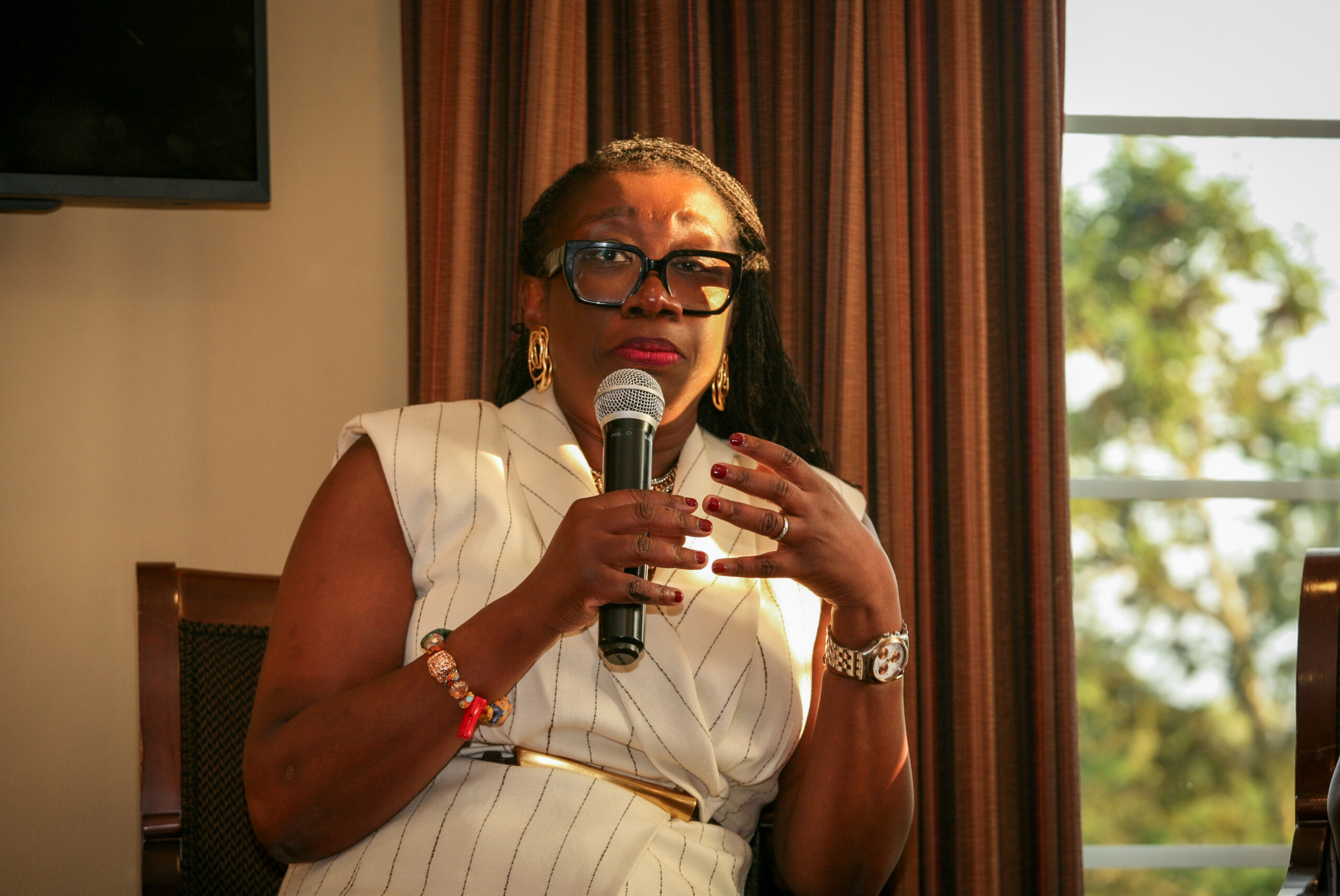
In case you missed it — Dr. Stella Awua-Larbi’s book launch for The Other Side of the Bed was a tremendous success! The entrance queue spilled out the doors, adding to the rising anticipation. Once inside, we were welcomed into an elegant facility with unending hors d’oeuvres, engaging conversations, and Dr. Stella herself, smiling warmly and greeting guests personally as she autographed our new books. Somehow, she never seemed to tire or falter!
Once everyone was as settled as could be — considering it was standing room only — Dr. Stella opened a panel discussion by sharing the inspiration for her book, carefully avoiding any spoilers. The next 90 minutes were filled with thoughts on topics such as the “noncompliant” label, medical education, how personal illness influenced one nurse’s approach to patient care, and how one patient advocates for herself and others.
Dr. Stella also shared her vision of reaching 1,000 healthcare workers in 2026. Looking around, I couldn’t help but notice that if everybody in the room tells just five people in healthcare — that’s 1,000 right there! Done!
If you’re still undecided about the book, I have to say (after reading it in two sittings): Honestly? Get it. It’s written in a way that you can find a few minutes for just one chapter at a time, or you could get comfy and read it all at once. To order your copy, click here. If you’d like free bookmarks with helpful hints to go with your new book or to share with others, contact us here with your request.
Here are a few notable quotes from the panel discussion:
On the moment that Dr. Stella realized her most important tool wasn’t in the medical bag but was more personal:
“A patient had been sick for nearly her entire life. 80% of her time was in the hospital. I knew that I would be very happy to expect her to meet me where I’m at, but it had to be the other way around. I had to meet her where she was at. I knew that everything was going to change for me. This patient taught me getting to know the human beyond that chart, that diagnosis.”
On “noncompliant” patients, from Dr. Stella:
“When I hear noncompliant, I ask myself — why? Why did they not take their medication or come for an appointment? Labeling is a universal thing, sometimes it’s a safety net. But they’re not just a patient. They have feelings, they’re afraid of what you’re telling them. So it’s an art, trying to really be objective and be professional, and also realizing that they’re someone’s mom, someone’s friend, someone’s co-worker, before they became your patients.”
On medical education, from panelist Dr. Denise Asafu-Adjei, MD, MPH at University of Chicago*:
“When people come to you, they’re bringing so much more to the table — their family problems, their financial problems, work — and you’re not encapsulating all that in the 15 minutes that you have to see them. With medical training, as we become a lot more focused on numbers, I think you miss that connection. This is just the way the system is set up.
But if I have 15 minutes to talk to you, it takes a lot of skill to still be able to emotionally connect to you, fix your issue, and still be able to give all of my patients that time…We need to focus less on the burnout, on how so many of our trainees just see us being tired and overworked. They don’t see these connecting moments that keep us in medicine.”
On the influence of personal illness on a healthcare provider’s approach to patient care, from panelist Michelle Evans at Silver Cross Hospital, medical informatics specialist, nurse for over 30 years, and patient of Dr. Stella:
“I’ve always thought I was an empathetic person, but I feel that [my illness] changed me. I spend more time talking to my patients, educating them. I learned to sit down and speak to people and try and connect with them…I’ll sit and speak to them and find out they love cats, so I’ll sit and talk about cats. Just so that they’re comfortable to reach out to me and ask me questions.
The big thing that I try to do is not only educate patients, but the other nurses around me. Sometimes nurses need to take a step back and understand what’s causing the patient to call, or to be on the line, or to be that nuisance patient — you just need to sit down and understand what’s going on with them.”
On what patients want healthcare providers to understand about what it feels like to be on the other side of the bed, from panelist Jennifer Arthur, teacher, mother, and patient of Dr. Stella:
“Every patient carries a story outside of their diagnosis. We are someone else besides just that patient, or their labs, or things like that. I think it’s important that we feel respected and we feel part of — making sure that we are heard, that we’re understood, and they know us. I think that’s what everyone wants. When you think about life in general, people just want to know that they are heard.”
On Dr. Stella’s renewed approach to patient care, after living through the vignettes captured in her book:
“I’m looking at the patient as human. If I was talking to my brother, my husband, my kid about this, what… how… what kind of… how would I… how would I spell that out to them? That is my approach.”
Out of these quotes, which one speaks to you the most — and does it remind you of a moment from your own experience? We’d love to hear your story in the comments below!


*Dr. Denise Asafu-Adjei is Assistant Professor of Surgery and Medical Director of Men’s Health and Male Reproductive Medicine at the University of Chicago.



Leave a Reply